

After seeking input from the public on its appeal process late last year, the Information and Privacy Commissioner of Ontario (IPCO) has introduced changes to the appeal process that will be of interest to all Ontario provincial and municipal institutions that process Freedom of Information (FOI) requests. The changes are comprised of a new Expedited Appeal Process, which came into effect on July 9, 2024, and a new Code of Procedure for Appeals, which will be coming into effect on September 9, 2024.
Expedited Appeal Process
IPCO’s new expedited appeal process is intended to resolve appeals and complaints faster, allowing the parties in certain types of appeals to achieve resolution more quickly. The new process applies to access to information appeals under the Freedom of Information and Protection of Privacy Act (FIPPA) and the Municipal Freedom of Information and Protection of Privacy Act (MFIPPA), as well as some personal information complaints under the Personal Health Information Protection Act (PHIPA) and Part X of the Child, Youth and Family Services Act (CYFSA).
In the past, appeals typically started at the intake stage and were then streamed to the mediation stage. If the subject of the appeal was a Deemed Refusal, a Failure to Disclose Records, a Time Extension, a Transfer or an Adequacy of Decision, the IPCO mediator was empowered to deem the matter a “straightforward appeal” and subject it to an expedited mediation process. Under the expedited mediation process, if the parties were unable to settle the matter within 14 days, the mediator could issue an order disposing of the issues in the appeal, bringing the appeal to an end.
Under the new expedited appeal process, appeals may be streamed to mediation, directly to adjudication, or in some cases, to the new expedited appeals process, where it will be handled by the IPCO’s “Expedited Appeals Team”. According to the new Practice Direction 13:
1. The IPC’s Expedited Appeals Team is comprised of a specialized group of IPC staff members, called Case Leads, each of whom has the delegated authority to resolve, dismiss, or issue an order disposing of an Appeal utilizing expedited processes. This is a single-person processing model.
2. The Expedited Appeals Team will employ a process to handle Appeals relating to straightforward, preliminary, or procedural issues, where there is no potential for an Order to disclose information/records.
3. The goal of the Expedited Appeals Team is to expedite the resolution of the issue(s) in an efficient and effective manner, while maintaining fairness and impartiality.
IPCO Practice Direction 13 (published July 2024)
Under the new Practice Direction, all of the following Appeals will routinely use the new expedited process:
- Adequacy of Decision
- Deemed Refusal
- Failure to Disclose
- Fee
- Reasonable Search
- Time Extension
- Transfer
Further, the IPCO may, at its discretion, determine other types of appeals that should use the expedited process.
Under the new expedited process, the intention is for the entire appeal to be processed by a single person, namely, a Case Lead who may resolve, dismiss, or issue an Order using expedited processes. If a mutually agreeable resolution is not possible, the Case Lead either dismisses the Appeal or conducts an Inquiry and issues an Order.
Appeals handled under the expedited process may forego some of the usual appeal processes and procedures, including:
(a) having a single decision-maker attempt to find a mutually agreeable
IPCO Code of Procedure (Published August 2024)
resolution to the issues between the Parties, dismiss the Appeal, or
issue an Order;
(b) shortening timelines for submissions and responses by the Parties;
(c) strictly adhering to established deadlines;
(d) conducting fixed-day informal dispute resolution;
(e) conducting an oral Inquiry;
(f) relying on affidavit evidence of the Parties; or
(g) issuing an Order without hearing further from the Parties.
Ontario’s Information and Privacy Commissioner Patricia Kosseim has previously been quoted as saying the pressures on Ontario’s access system are “unsustainable”; hopefully this new expedited process will relieve some of the pressure from a heavily burdened appeal system.
New Code of Procedure
In addition to the new expedited process described above, on August 9, 2024, IPCO published a revised Code of Procedure for Appeals Under FIPPA and MFIPPA (the “Code”), which will come into effect on September 9, 2024. Revised Practice Directions are also being published as supporting documents to the new Code.
The new Code includes a description of the expedited appeals process, criteria for reconsideration IPCO orders, and disclosure requirements when using artificial intelligence tools to prepare submissions to the IPCO.
The updated Code is intended to serve multiple purposes, including better reflecting the IPCO’s actual practice (both current and forthcoming) when considering appeals under FIPPA and MFIPPA, helping the IPCO process appeals in a more timely fashion, and providing greater transparency regarding the IPCO’s procedures for processing appeals.
Some of the highlights and changes from the new Code of Procedure include:
- The new Code explicitly separates the “intake” stage from the “early resolution” stage, introducing a new defined term for each stage. Intake is now limited to ensuring that the appeal meets the formal requirements and streaming the appeal to the appropriate next stage; whereas in the “early resolution” stage, the IPCO will contact the parties to attempt to reach an informal resolution and may dismiss the appeal or move it to another stage of the appeal process.
- When a Constitutional Question is being raised, a special notice form to be made available on the IPCO website must now be used (or a similar form that contains the same information)
- The new Code contemplates appeals being submitted through the IPCO’s online appeal submission and payment portal
- Previously, the Code stated that an appeal not fully settled at mediation will move to adjudication. To better reflect current practice, the revised Code permits mediation to move an appeal to adjudication or, as appropriate, to another part of the appeal process, in order to resolve any remaining issues.
- Section 8 now provides significantly more detail about the adjudication process (as compared to Section 7 of the old Code), primarily to reflect current practice.
- Section 8.02 now clarifies that “the Adjudicator may consider the information contained in the Report of Mediator to determine whether the circumstances warrant conducting an Inquiry”. This would suggest that the conduct and representations of the parties made in mediation may well affect the outcome of the appeal at the adjudication stage.
- Section 8.19 indicates that if any Party (other than the Institution) does not submit Representations by the specified deadline, the Appeal may be deemed to be abandoned and the file will be closed, or the Inquiry may proceed, and an Order may be issued in the absence of such Representations.
- The new Code incorporates the Expedited Appeal Process described above.
- Section 19 gives the IPCO authority to deem an appellant to be a vexatious litigant and place restrictions on their ability to file appeals or close their existing appeals.
- Section 20 provides rules about parties making use of artificial intelligence (AI) in the preparation of appeal representations. Namely, any party using AI must disclose to the IPCO that AI was used, the type of AI used, and how AI was used. Further, the party must review the accuracy and content of legal references or analysis contained in their representations created or generated by AI and certify in writing to the IPCO that they have completed that review.
More details about the changes in the new Code of Procedure for Appeals can be found on the IPCO’s website here: https://www.ipc.on.ca/en/access-organizations/code-of-procedure. Links to the new practice directions are available at the bottom of the same page by selecting “Practice Directions for FIPPA/MFIPPA Appeals: effective September 9, 2024”.
Upgrade to FOI Assist
If you’re still handling FOI requests manually, it’s time to streamline your process with FOI Assist—the only Freedom of Information software built specifically for Ontario’s provincial and municipal institutions. Developed by an experienced Ontario lawyer, FOI Assist is meticulously designed to meet the unique needs of your institution. Our software is continually updated to align with the latest directives from the Information and Privacy Commissioner of Ontario and the Ministry of Government Services. Fully compliant with FIPPA, MFIPPA, and their regulations, FOI Assist ensures you stay ahead in your FOI responsibilities with ease and confidence.
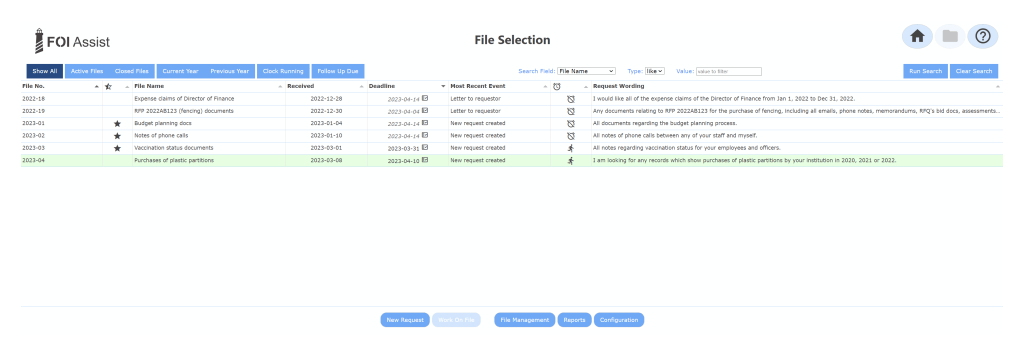
Learn more about the FOI Assist software by reading our Announcing the release of the FOI Assist software article. Better yet, book a demonstration today and see the difference for yourself!

 FOI Assist Knowledge Base
Leave a comment