
Recent Articles
-

FOI In The News (April 23, 2019)
CBC News: Overburdened public bodies seek fees, restrictions on freedom of information requests Ian Froese, April 11, 2019 In Manitoba, there is currently no charge to apply for access to records, and requestors are allotted two free hours for search and preparation time. As part of a review of Manitoba’s Freedom of Information and Protection…
-
Do institutions have to disclose electronic versions of records?
Can requestors specify whatever format they want? How should an institution respond to a request that specifies the format in which the requestor would like to receive the records? For example, an institution might receive a request for hundreds of pages of documents which are stored by the institution only in hard copy, but the…
-
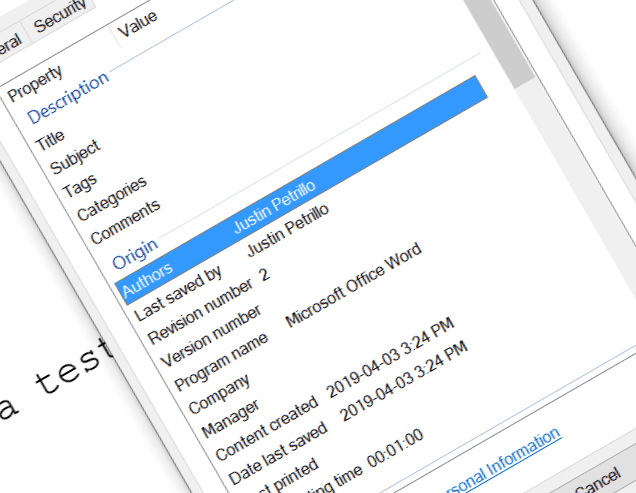
“I thought we deleted that!” Metadata and Hidden Data
What are Metadata and Hidden Data? Metadata Metadata refers to information “about” a record. For a Microsoft Word document, this could include information such as the author of the document, the date and time the document was created, the time spent editing the document, its length, its description, comments about the document, etc. For a…
-
Decoding the names of FOI decisions
What do the names of FOI decisions mean? The Information and Privacy Commissioner of Ontario (IPCO) assigns a unique identifier to each decision made by its adjudicators. Generally, the identifier is a short string of letters and numbers, such as P-22, PO-2400, or MO-1508. But in the early days of IPCO, orders were identified with…
-

Update: FOI Flowcharts have been sent (copies are still available)
If you requested a poster-sized printed copy of the FOI Flowchart, it has now been sent. Keep an eye on your incoming mail, as the posters will be arriving shortly. If you are an FOI professional in Ontario and you haven’t seen the FOI Flowchart yet, I suggest taking a look. It is available for…
-

Receiving an FOI Request from a Lawyer
When you have received a Freedom Of Information (FOI) request from a lawyer, there are a few things to consider: Is your organization obligated to respond to FOI requests? An earlier article, Do I have to respond to a Freedom Of Information (FOI) request?, may help you answer this question. Keep in mind this guidance applies only…
-

Requests for Personal Information with the Consent of the Individual
Institutions are sometimes faced with a request from someone who purports to be acting on behalf or with the consent of the individual whose personal information is being requested. The requestor in this case may be a lawyer, insurance company, or agent, or it may simply be a friend a relative who is helping the…
-

Verifying the Identity of the Requestor
The Freedom of Information and Protection of Privacy Manual (the “FOI Manual”) notes that when a requestor asks an institution for the requestor’s own personal information, the institution must first verify the identity of the requestor before any personal information is disclosed. The FOI Manual suggests that an institution may be able to fulfill the…
-
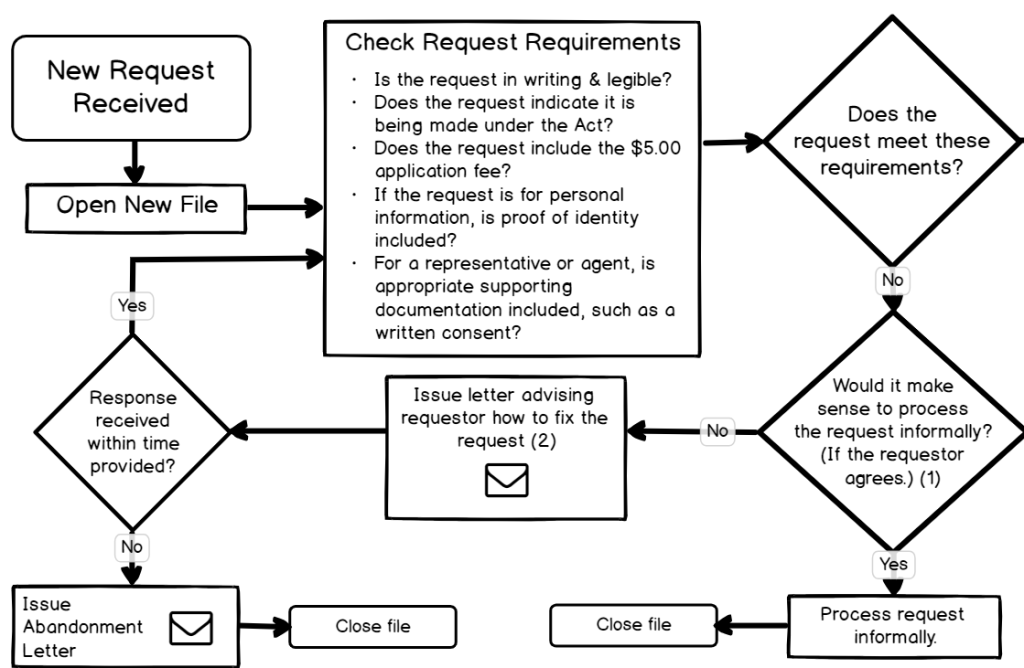
The FOI Request Process Poster
I’ve created a “flowchart” poster which describes the entire process of answering an FOI request for records under Ontario’s Freedom Of Information and Protection of Privacy Act (FIPPA) as well as under Ontario’s Municipal Freedom of Information and Protection of Privacy Act (MFIPPA).
-

Leave no paper trail?
“Family minister’s foster care review instructions leave no paper trail” Katie Nicholson, Joanne Levasseur · CBC News · Posted: Feb 20, 2019 4:00 AM CT The article above appeared on the CBC website just this morning. I think it offers an important lesson to institutions who may be tempted to avoid keeping appropriate written records as a way of limiting their…
-
How many FOI requests should my institution expect to receive?
Every year, the Information and Privacy Commissioner of Ontario (IPCO) publishes a statistical report which shows how many FOI requests each institution in Ontario received in a given year, as well as other statistics related to the performance of each institution’s FOI program, such as how many requests were completed in a given year, how…
-
The Freedom of Information and Protection of Privacy Manuals
Wait — there’s more than one? When I was asked to manage the FOI program at the Toronto 2015 Pan Am Games, I spent the first few weeks interpreting FIPPA directly using only David Goodis’s excellent annotated Act. My life got a whole lot easier when I discovered the Ministry of Government Services’ Freedom of Information…

